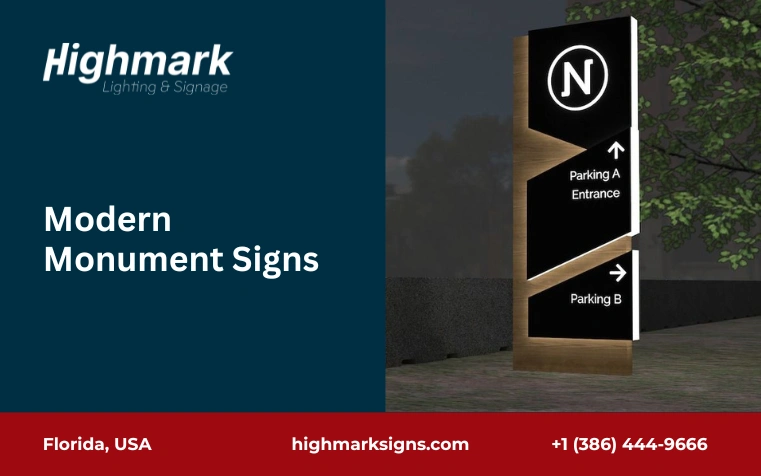

Modern monument signs are low-profile, free-standing structures designed to deliver high-impact branding at eye level. These structures integrate architectural elements to guide customers, enhance wayfinding, and improve corporate site visibility effectively.
Effective monument signage establishes a permanent physical presence for commercial properties. By utilizing modern design techniques, such signage solutions combine masonry, metal, and digital displays to communicate professionalism, stability, and brand authority clearly.

What is Monument Signage?
Monument signage refers to ground-level outdoor monument signs typically constructed from stone, brick, or high-density urethane. These structures are engineered to withstand extreme weather conditions while maintaining aesthetic appeal.
A monument sign serves as the primary landmark for your property. It bridges the gap between the street and the building, ensuring your brand is visible to passing motorists.
Modern monument signs often incorporate architectural lighting. This ensures your business remains visible 24/7, providing a continuous marketing return on investment for commercial properties and residential complexes.
The Strategic Benefits of Modern Monument Signs for Business
Installing monument signs for business purposes establishes immediate credibility. A well-designed sign acts as a silent salesperson, conveying a sense of permanence and reliability to potential clients.
First impressions are shaped within seconds of arrival. Contemporary monument signs provide a sophisticated greeting, aligning your physical site with modern branding standards and architectural trends beautifully.
Strategic placement of exterior monument signs improves wayfinding. By reducing driver frustration and clearly marking entrances, you enhance the overall customer experience before they even enter the building.
Custom monument signs offer unique differentiation in crowded markets. Tailoring the monument sign design to match your building’s facade creates a cohesive visual identity that strengthens local brand recognition significantly.
What are the Different Types of Modern Monument Signs?
Illuminated vs. Non-Illuminated Signage
Illuminated monument signage design utilizes LED technology for energy efficiency. Internal illumination ensures the face of the sign glows evenly, while halo-lighting creates a sophisticated, premium aesthetic.
Non-illuminated monument signage relies on external ambient light or dedicated ground-mounted spotlights. These are often preferred for historic districts or areas with strict local light pollution ordinances.
Digital monument signs incorporate programmable LED centers. This allows businesses to update messages, promotions, or public service announcements in real-time, offering maximum flexibility for dynamic commercial environments.
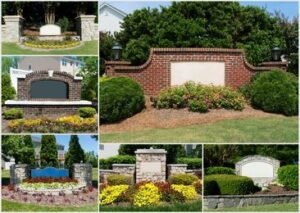
Materials Matter: From Stone to Wood Modern Monument Signs
Stone monument signs utilize granite, marble, or stacked slate. These materials offer unmatched durability and a classic, heavy-duty appearance that communicates longevity and high-end corporate values effectively.
Brick monument signs provide a traditional look that complements many educational and municipal buildings. They offer high resistance to impact and require minimal maintenance over several decades of use.
Wood modern monument signs use cedar or redwood for a natural, organic feel. Modern treatments and sealants now prevent rot, allowing wood to remain a viable contemporary signage option.
Aluminum and composite materials are popular for contemporary monument signs. These materials allow for sleek lines, metallic finishes, and complex geometric shapes that are difficult to achieve with masonry.
How to Design a Modern Monument Sign for Maximum Impact
Effective monument signage design prioritizes legibility from a distance. Use high-contrast color palettes and bold, sans-serif typography to ensure drivers can read your information at high speeds.
Consider the “negative space” within your design. Overcrowding the sign face with too much text reduces impact; focus on the brand name, logo, and primary street address for clarity.
Scale is critical for building monument signs. The height and width must be proportional to the surrounding landscape and the speed of the adjacent roadway to ensure optimal visual engagement.
Incorporate architectural accents that mirror your facility. Using matching brickwork or metal finishes creates a seamless transition between your signage and the primary structure, reinforcing a unified corporate image.
Request your free consultation today to discuss engineering requirements for your specific site.
Modern Monument Signs Ideas & Design Inspiration
Look at monument signage examples that utilize mixed media. Combining brushed aluminum with a stacked stone base creates a textured, multi-dimensional look that captures attention more effectively than flat surfaces.
Cantilevered designs offer a bold, modern signage aesthetic. By offsetting the sign cabinet from the base, you create a sense of movement and architectural sophistication that stands out immediately.
Integrated planters are popular modern monument signs ideas. Surrounding the base with seasonal flora softens the structure and helps the sign blend into the professional landscaping of the property.
Top Design Features for 2026:
- Recessed LED channels for depth.
- Perforated metal overlays for texture.
- Cor-Ten steel for an industrial, weathered look.
- Glass or acrylic accents with edge-lighting.
Technical Specifications: Common Sizes of Modern Monument Signs
| Sign Component | Standard Dimensions | Recommended Material |
|---|---|---|
| Single Tenant Base | 4′ – 6′ Width | Masonry or Aluminum |
| Multi-Tenant Height | 6′ – 10′ Height | Steel Frame / Acrylic Faces |
| Clear Viewing Zone | 2′ – 4′ from Grade | High-Contrast Vinyl/Paint |
| Foundation Depth | 36″ – 48″ (Varies) | Reinforced Concrete |
Standard types of monument signs vary based on local zoning codes. Most municipalities limit the height of monument signs for business to 6 or 8 feet to ensure sightline safety for exiting vehicles.
The “Sign Face” area is the most regulated signage details. Engineering plans must account for wind load requirements, ensuring the internal structure can withstand gusts up to 100 mph.
Engineering for Environmental Durability
At Highmark Signs, our engineers design monument signage to meet Florida wind-load and zoning requirements.
Architectural signage solutions must withstand thermal expansion and contraction. High-quality aluminum alloys and specialized paint finishes prevent cracking and peeling during extreme temperature fluctuations.
Corrosion resistance is vital for exterior monument signs. Stainless steel fasteners and galvanized internal frames prevent rust streaks from marring the appearance of the sign over time.

Longevity: How to Maintain a Modern Monument Sign?
Regular inspections of the foundation are essential. Check for soil erosion or shifting that could compromise the level of the sign or cause structural stress to the masonry base.
Clean the sign face twice annually using non-abrasive detergents. Removing environmental pollutants and hard water stains preserves the vibrancy of the custom monument signs.
Repaint or reseal any wood elements every three years. This prevents moisture penetration and sun damage, extending the lifespan of wood modern monument signs in harsh environments.
Professional Monument Sign Installation & Cost Factors
Monument sign cost is influenced primarily by material selection and site preparation. Masonry work requires specialized labor, while prefabricated aluminum signs offer a more budget-friendly alternative.
Permitting is a significant factor in the monument sign installation process. Professional sign companies handle the zoning applications, ensuring your custom pylon signs or monument signs meet all local setbacks.
Professional installation ensures structural integrity. Using cranes and specialized rigging, experts secure the sign to a reinforced concrete footer, preventing tilting or collapse.
Conclusion: Choosing the Right Modern Signage for Your Building
Selecting the right monument signage requires a balance of aesthetics, durability, and local compliance. A well-engineered sign provides decades of service while elevating your property’s perceived value.
Finalize your project by ensuring all monument sign design specifications meet local engineering codes. This guarantees that your modern monument signs remain a safe, beautiful, and effective part of your landscape.
Frequently Asked Questions About Modern Monument Signs
How to design a modern monument sign?
To design an effective modern monument sign, prioritize high-contrast colors and bold typography for maximum legibility. Focus on a clean monument signage design that mirrors your building's architecture while leaving enough negative space to ensure your brand name and logo stand out clearly.
What are the common sizes of modern monument signs?
Common sizes for building monument signs typically range from 4 to 6 feet in width for single tenants, and up to 10 feet in height for multi-tenant structures. Most monument signs for business are restricted by local zoning codes to a height of 6–8 feet to maintain road safety and sightlines.
How to maintain a modern monument sign?
Maintaining a modern monument sign involves cleaning the sign face twice a year with non-abrasive detergents to preserve the finish. For wood modern monument signs, it is essential to reseal the material every three years, while illuminated exterior monument signs require regular checks of LED components to ensure long-term performance.